Environment Class 11
CATEGORY IV PROTECTION (5:10 PM):
- The areas have specific conservation targets.
- The protected area can either deal with species management(protection) or habitat management(protection).
- The concerned species/habitat are endangered and need continuous protection.
- For example- National Chambal Gharial Wildlife Sanctuary.
- These areas can even be part of larger protected areas like Biosphere Reserves and other ecosystems.
- Even in that case, the particular region would still be protected as per the strategies of Category IV of IUCN.
- Indian Wildlife Sanctuaries, Tiger Reserves, and Elephant sanctuaries are part of these protected areas.
-

Category V: Protected Landscapes or Seascapes:
- An entire body of land or ocean and the region overlapping between them becomes protected under this category.
- There are no specific conservation targets like special flora, fauna, or habitats because of the intimate links between the geographic, ecological, and the lifeforms of the region.
- These regions have very important and valuable ecological, biological, and even cultural features which are very closely interlinked.
- Communities living here are allowed to carry out their traditional practices, except certain practices like hunting.
- Developmental projects are prohibited.
- Traditional forestry, agriculture, and grazing are allowed but based on sustainability.
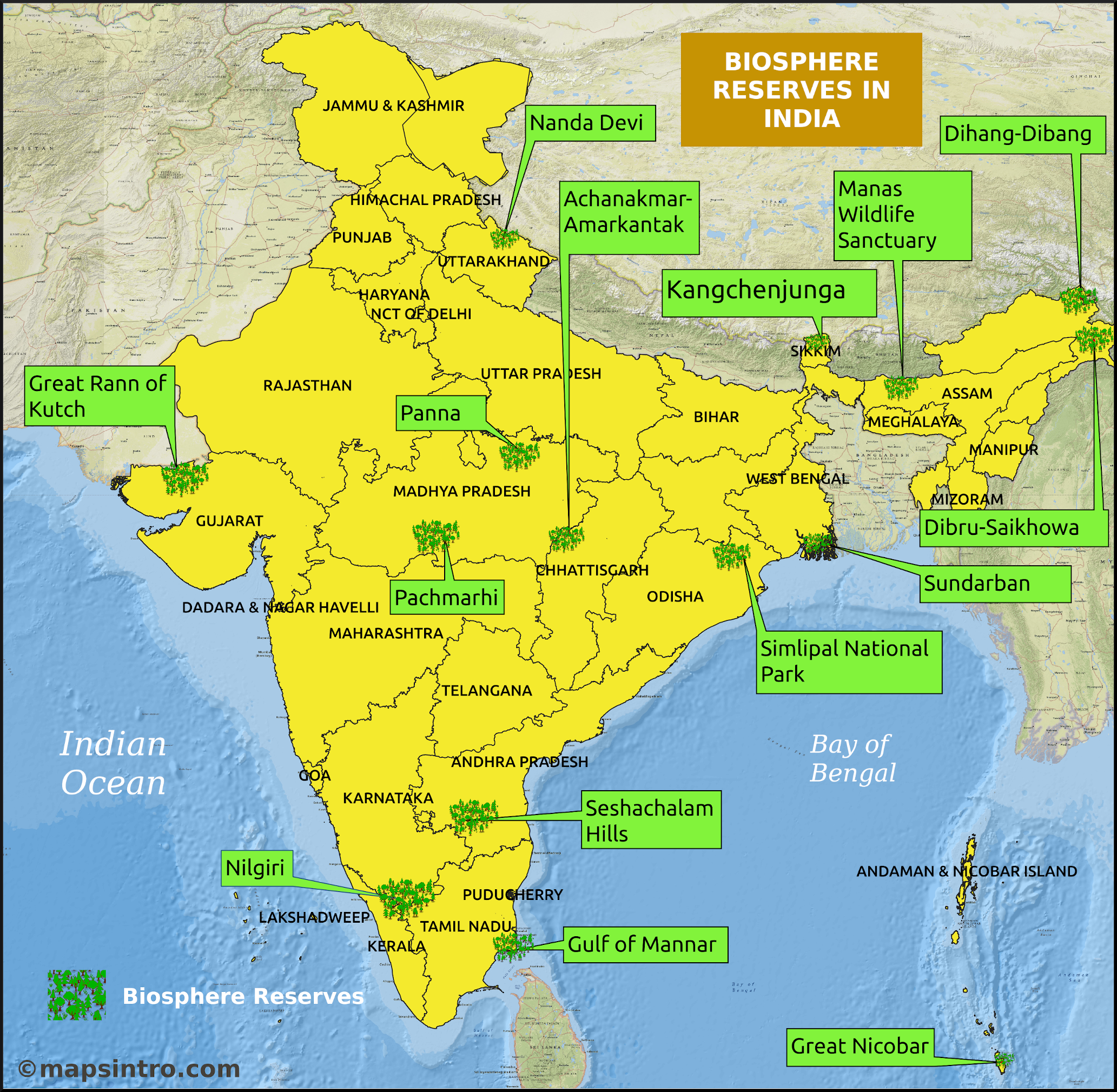
- India's biosphere reserves, conservation reserves, marine protected areas, and conservation reserves are part of this category of protected areas
- For Example, the Gulf of Mannar biosphere reserve.
-
CATEGORY VI: PROTECTED AREAS WITH SUSTAINABLE RESOURCE USE (5:35 PM):
- The only category of IUCN which calls for large-scale involvement of local communities for management and conservation.
- The communities have been living in harmony for many years with traditional knowledge.
- But still, the impact of human activity on the resources and ecosystem has been very low.
- So their pattern of resource and exploitation is sustainable and hence conservation strategies will simply borrow from these.
- All traditional activity will be allowed but modern industrial activity and mining activity will be prohibited.
Protected areas under the Wildlife (Protection)Act of India 1972:
- I. National Parks.
- II. Wildlife Sanctuaries.
- III. Conservation Reserves
- IV. Community Reserves
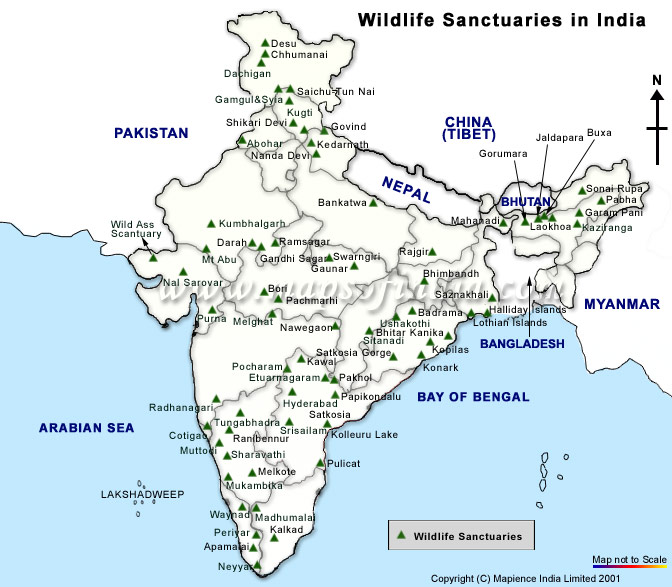
WILDLIFE SANCTUARIES(WLS) (6:00 PM):
- These are species-specific and habitat-specific conservation areas.
- The aim is to protect endangered species in their natural habitat.
- They lie under category IV of IUCN.
- The state governments can notify WLS, but there is no need for legislation.
- Even the central government can notify WLS after an amendment to WPA 1972.
- They can also be created on privately owned land.
- If any private land lies within a WLS, that will be considered a part of the WLS and the owner gets suitable compensation.
- The District Collector is the authority to decide on revenue matters like settling the claims of people who owned the land earlier.
- The sanctuaries are managed by a committee headed by the Chief Wildlife Warden of the state.
- He will be responsible for controlling, managing, maintaining, and conserving the sanctuary.
- The management committee to support the warden is the Advisory Committee created by the state consisting of:
- I. Representatives of NGOs.
- II. Members of State legislative assemblies.
- III. People who have expertise in conservation.
- IV. Representatives of panchayat raj institutions.
- V. Representative from the Department of Home of the state government.
- Except in the protected habitats of protected wildlife, the normal pattern of human activity is allowed
- They can be very large and include villages, highways, and sustainable traditional practices(agriculture, grazing, collecting non-timber forest produce, etc.) are allowed.
- Mining, industries can be allowed only under special conditions.
- They are mainly allowed at fringes and not in the core area.
- Andaman& Nicobar Islands have around 96 WLS.
-
NATIONAL PARKS (6:25 PM):
- They are always created from state-owned lands.
- The state notifies the national park and determines the boundaries under a law.
- The boundaries cannot be changed, unless under the recommendation of the National Board of Wildlife.
- Agriculture, grazing, and collection of non-timber forest produce will not be allowed.
- Unlike WLS where entry is unrestricted (but permission must be formally taken), the entry is restricted for specific purposes like approved tourism, photography & scientific research.
- It is managed and controlled by the Chief Wildlife Warden of the state and his advisory committee need not include MLAs.
- Unlike WLS, national parks can also e created to protect historical buildings, objects, and attached cultural features.
- The national parks get greater funding from the central government.
-

- Hemis National Park is the largest national park.
- Desert national park is the second largest national park.
- South Button National Park of Andaman & Nicobar Islands is the smallest national park.
Conservation Reserves:
- These are created from land owned by the government and always adjacent to national parks or wildlife sanctuaries.
- It may also be on the land connecting one protected area with another.
- State governments notify the conservation reserves but by an amendment to the Wildlife Act 1972 in 2021, even the central government can notify.
- Management and maintenance are under the control of the Chief Wildlife Warden of the State.
- He will have an advisory committee that will include:
- I. Representatives of NGOs.
- II. Members of State legislative assemblies.
- III. Representative of the Department of Agriculture Animal Husbandry of the state government.
- IV. Representative of the Department of Forest & Wildlife of the state government.
- Generally, the state exercises all powers, and the central government can only exercise some powers with the prior consent of the state.
- They can also be formed to protect cultural values.
- Some examples include Bir Bara Ban of Haryana, Anjneri of Maharashtra, etc.
COMMUNITY RESERVES (7:00 PM):
- Community reserves are created from lands that are privately owned, either by the individual or the community.
- The purpose is the conservation of flora & fauna, and sometimes for the conservation of traditional practices and cultures.
- This land should not be within the national park, conservation reserve, or sanctuary.
- The communities or individuals who own the land should come forward to seek the conservation of the flora, fauna, and wildlife.
- They are seen as buffer zones between national parks & wildlife sanctuaries or between reserve forests and protected forests to absorb the impact of human activity.
- The state government notifies after and Memorandum of Understanding (MOU) is signed between the village council and the forest department.
- A Joint Forest Management (JFM) committee must also be a part of the MOU.
- Once notified, the Chief Wildlife Warden of the state becomes the governing authority and no changes can be made in the land use pattern after it is notified.
- For example, grazing, hunting, agriculture, and collection of non-timber forest produce will not be allowed.
- However, on special grounds, some of these activities may be allowed on a limited scale if it is approved by the management committee headed by Chief Wildlife Warden and the state government.
- The JFM Committee will identify the beneficiaries for settling claims of people who have surrendered their lands and livelihood due to the creation of the reserve.
- Livelihood-generating and conservation projects are funded by the central government after approval by the Ministry of Environment.
- Some examples include Kokkare Bellur of Karnataka, Gogabil Reserve in Katihar, Bihar, etc.
MAN AND BIOSPHERE PROGRAM (7:30 PM):
- The program was launched by UNESCO in 1971.
- The biospheres contain flora and fauna in their most pure state.
- The analysis of these areas would help in better understanding human impacts in other areas.
- Protection of natural resources will help in availing the ecosystem services in a better manner.
- Biospheres can highlight mutual linkages between humans and nature, which could guide overall human-nature interactions.
Some objectives of the programs:
- Preservation of ecosystems in pure form.
- Knowledge of the most efficient methods for exploitation and conservation.
- Gaining scientific knowledge to understand ecological processes better.
- Coming up with better scientific ways to carry sustainable industrialization in pristine areas.
- Achieving collaboration on a global level, and involvement of communities on ground level.
The topics for the next class are the completion of Biosphere Reserves, Indian steps for conservation & Convention on Biodiversity.